Artisan Furnaces - Quality Craftsmanship Tools for Global Artists

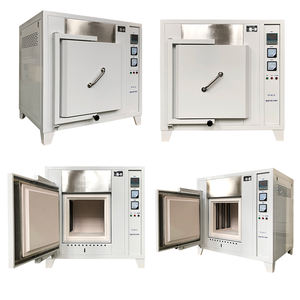
PRODUCT PARAMETERS
Description
Overview of Vacuum Furnace
A vacuum furnace is a type of industrial furnace that operates in a vacuum environment to eliminate contamination and oxidation during heating processes. It is commonly used for heat treatment, sintering, brazing, and other high-precision applications where purity and control are critical.
Features of Vacuum Furnace
Contamination-Free Environment: Eliminates oxidation and impurities by operating in a vacuum.
High-Temperature Capability: Can reach extremely high temperatures while maintaining process integrity.
Precision Control: Offers accurate temperature and atmosphere control for consistent results.
Versatile Applications: Suitable for heat treatment, sintering, brazing, and more.
Energy Efficiency: Designed to optimize energy use and reduce operational costs.
Safety Mechanisms: Includes safety features like pressure relief valves and emergency shut-off systems.
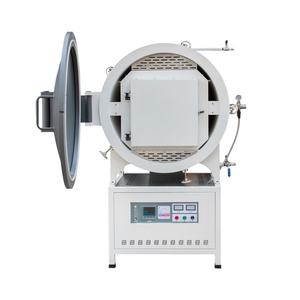
(1600 degree high temperature lab Vacuum Tubular Furnace)
Specification of 1600 degree high temperature lab Vacuum Tubular Furnace
This 1600 degree high temperature lab vacuum tubular furnace handles demanding thermal processes needing extreme heat under controlled atmospheres. It reliably reaches 1600 degrees Celsius. This maximum temperature suits advanced materials research, ceramics sintering, and metallurgical studies.
The core component is a high-purity alumina or quartz tube. This tube runs through the furnace hot zone. Alumina tubes withstand the full 1600C temperature. Quartz tubes are suitable for slightly lower maximums. The tube seals tightly at both ends. This sealing creates a vacuum environment inside.
Heating relies on high-quality molybdenum disilicide elements. These elements surround the alumina tube. They provide uniform, efficient heating throughout the hot zone. The hot zone length varies. Common sizes are 200mm, 300mm, or 400mm. The furnace shell features double layers with air cooling channels. This design keeps the outer surface safe to touch during operation.
Vacuum capability is essential. A rotary vane pump connects to the furnace tube. It pulls vacuum down to 10-2 Torr or better. This low pressure prevents oxidation. It allows processing in inert gases like argon or nitrogen too. Gas flowmeters manage atmosphere introduction precisely.
Temperature control is digital and precise. A programmable controller uses PID algorithms. A type B or S thermocouple measures temperature inside the hot zone. The controller maintains stable temperatures. It also manages complex heating and cooling ramps. Over-temperature protection is automatic. This prevents damage from exceeding safe limits.
Safety features include door interlocks. These cut power if the furnace door opens unexpectedly. A circuit breaker protects against electrical faults. The furnace suits demanding lab work needing high heat and controlled atmospheres.
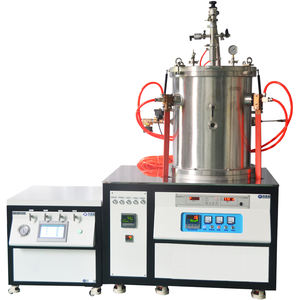
(1600 degree high temperature lab Vacuum Tubular Furnace)
Applications of 1600 degree high temperature lab Vacuum Tubular Furnace
This 1600 degree high temperature lab vacuum tubular furnace handles demanding heat treatments. It heats materials inside a sealed tube under vacuum. This prevents unwanted reactions with air. Scientists and engineers rely on it for many critical tasks.
Material heat treatment is a primary use. The furnace anneals materials. Annealing softens metals. It relieves internal stresses. The furnace sinters powdered metals and ceramics. Sintering bonds particles together. This creates solid parts. The furnace also sinters advanced ceramics. These need high purity conditions. Vacuum prevents contamination.
Metallurgy research depends on this furnace. It melts special alloys. These alloys need protection from oxygen. Vacuum provides this protection. Researchers study alloy behavior at extreme heat. They observe phase changes. They test material stability. The furnace creates the necessary environment.
Ceramics processing benefits greatly. The furnace fires high-performance ceramics. These ceramics require very high temperatures. Vacuum ensures precise control. It prevents defects from gas bubbles. It allows pure ceramic structures to form.
Materials science studies use the furnace extensively. Scientists synthesize new materials. They grow crystals. They process nanomaterials. The vacuum environment is essential. It stops surface reactions. It allows clean material growth. Researchers investigate material properties under heat. They test thermal stability. They look for decomposition points.
The furnace supports catalyst research. It activates catalyst materials. Activation prepares catalysts for use. The furnace calcines catalyst precursors. Calcination removes volatile components. It forms the active catalyst structure. Vacuum helps achieve specific surface properties.
Testing material performance happens here. The furnace exposes materials to extreme heat. Scientists measure how materials react. They assess oxidation resistance under controlled gas flow. They test creep behavior. Creep is slow deformation under stress. High temperature accelerates this process.
Company Introduction
Welcome to Designerstudiostore, your premier source for high-quality industrial furnaces designed to meet the stringent demands of modern manufacturing. Our extensive range includes electric, gas, and oil-fired furnaces tailored for various applications such as heat treatment, forging, and laboratory use. With cutting-edge technology and innovative designs, we ensure energy efficiency and superior performance in every product. At Designerstudiostore, we prioritize customer satisfaction by offering customized solutions, reliable after-sales support, and seamless global delivery options. Explore our catalog and discover why businesses worldwide trust us for their heating needs.
If you have any questions, please feel free to contact us(nanotrun@yahoo.com).
Payment Methods
T/T, Western Union, Paypal, Credit Card etc.
Shipment Methods
By air, by sea, by express, as customers request.
5 FAQs of 1600 degree high temperature lab Vacuum Tubular Furnace
Here are 5 FAQs about the 1600°C High Temperature Lab Vacuum Tubular Furnace:
What maximum temperature does this furnace reach?
This furnace reliably heats to 1600 degrees Celsius. It handles demanding high-temperature processes. The heating elements withstand extreme heat.
How strong is the vacuum inside the tube?
The furnace achieves a high vacuum. The vacuum level reaches 10-3 Pa. This strong vacuum prevents reactions with air. It creates a clean environment for sensitive materials.
What materials can be processed inside?
Many materials work well. Ceramics, metals, and advanced composites are common. The furnace tube resists high heat. The vacuum prevents oxidation. This protects your samples during heating.
Can I use gases other than a vacuum?
Yes, the furnace is flexible. You can use inert gases like argon or nitrogen. You can also use reactive gases. This allows different experiments and treatments. The atmosphere control is precise.
What safety features protect users?
Safety is critical. The furnace has over-temperature protection. It automatically shuts down if too hot. The outer shell stays cool. It prevents burns. Proper ventilation is essential. Always follow the safety instructions. Hot surfaces exist.

(1600 degree high temperature lab Vacuum Tubular Furnace)
REQUEST A QUOTE
RELATED PRODUCTS
Box type atmosphere furnace vacuum muffle furnace heat treatment annealing quenching furnace high temperature
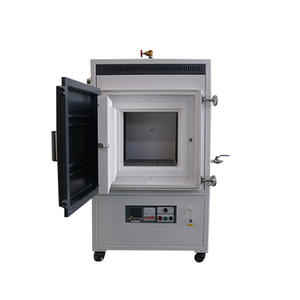
High Temperature Laboratory Electric Ultra Compact Arc Assisted Vacuum Metal Melting Furnace Crucible Furnace
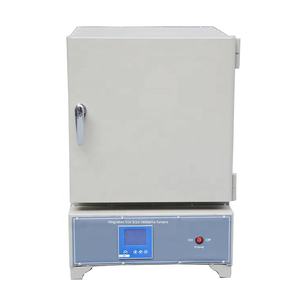
1700 degree vacuum furnace/box vacuum furnace-VF1700

1100C Max 8 inch OD 7.6 L Vacuum Chamber Furnace with Feedthrough flange
China Hot Industry Bell Type LDMC-30A Vacuum Ion Plasma Nitriding Furnace for Alloy Structural Steel and Bearing Steel
