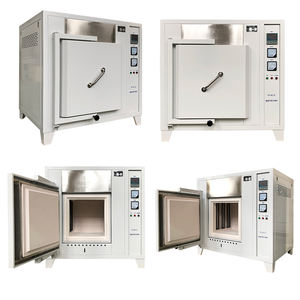
Artisan Furnaces - Quality Craftsmanship Tools for Global Artists

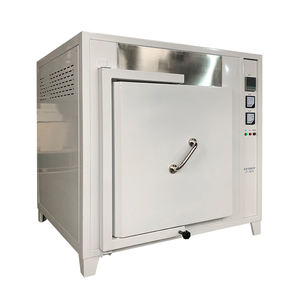
PRODUCT PARAMETERS
Description
Overview of Tube Furnace
A tube furnace is a type of laboratory equipment used for high-temperature applications, featuring a cylindrical heating chamber designed to heat samples uniformly along its length. Commonly used in material processing, chemical analysis, and semiconductor manufacturing, it supports processes like annealing, sintering, and calcination.
Features of Tube Furnace
Uniform Heating: Ensures even temperature distribution throughout the sample.
Cylindrical Design: Facilitates consistent heating by minimizing hot spots.
Temperature Range: Capable of achieving high temperatures suitable for various processes.
Programmable Controls: Allows for precise control over heating cycles and profiles.
Gas Flow Control: Supports controlled atmosphere environments for specific reactions.
Compact and Efficient: Designed for efficient operation with minimal footprint.
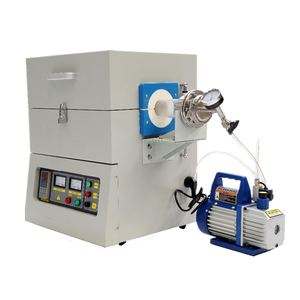
(PLC accuracy 1000MM Steel Pipe tube medium frequency Induction Heating Furnace)
Specification of PLC accuracy 1000MM Steel Pipe tube medium frequency Induction Heating Furnace
The PLC-controlled 1000MM steel pipe medium-frequency induction heating furnace delivers precise heating for industrial pipe processing. It handles steel tubes up to 1000mm in length with a diameter range of 20mm to 300mm. The furnace operates at a medium frequency of 1-10kHz, ensuring uniform heat distribution across the entire pipe surface. Temperature accuracy is maintained within ±5°C via the integrated PLC system, which continuously monitors and adjusts power output.
The furnace reaches a maximum operating temperature of 1200°C, suitable for annealing, hardening, and tempering applications. Heating speed ranges from 100°C to 500°C per minute, adjustable through the PLC interface to match material requirements. The induction coil design minimizes energy loss, achieving a thermal efficiency of 85% or higher. A water-cooling system prevents overheating, maintaining stable performance during extended operation.
Material compatibility includes carbon steel, alloy steel, and stainless steel pipes. The PLC system stores preset programs for different pipe grades and thicknesses, reducing setup time. Real-time data display shows temperature curves, power consumption, and process duration. Safety features include automatic shutdown for voltage fluctuations, coil leaks, or cooling failures.
The furnace structure uses heavy-duty steel frames with heat-resistant insulation layers. Power input requirements are 380V/50Hz or customizable for regional standards. Maintenance focuses on periodic coil inspections and coolant checks. Energy-saving modes cut idle power use by 30%, lowering operational costs.
Process repeatability meets industrial standards, with deviation rates below 0.8% across batches. The system integrates with conveyor lines for automated feeding and discharging. User access levels restrict parameter changes to authorized personnel. Fault diagnostics provide instant alerts with error codes for quick troubleshooting.
Remote monitoring via Ethernet or RS485 ports allows centralized control in multi-unit setups. Noise levels remain under 75dB during operation. The compact design suits workshops with limited space. Customizable coil shapes accommodate non-standard pipe geometries. Testing protocols ensure each unit performs to spec before delivery.

(PLC accuracy 1000MM Steel Pipe tube medium frequency Induction Heating Furnace)
Applications of PLC accuracy 1000MM Steel Pipe tube medium frequency Induction Heating Furnace
The PLC-controlled 1000MM steel pipe medium frequency induction heating furnace ensures precise temperature management for industrial heating processes. This system heats steel pipes uniformly, supporting applications like annealing, hardening, and bending. It works for pipes up to 1000mm in diameter, making it suitable for large-scale manufacturing. The PLC automates temperature adjustments, reducing human error and ensuring repeatable results. Operators input parameters once, and the system maintains accuracy across batches. This consistency improves product quality in industries like automotive, construction, and oil and gas.
The furnace uses medium frequency induction to generate heat directly within the steel pipe. This method avoids surface overheating, preserving material integrity. Energy efficiency is a key advantage, as induction heating targets the pipe’s core without wasting power. The process minimizes oxidation, reducing material loss and cleanup time. Fast heating cycles boost productivity, allowing faster completion of large orders.
Integration with PLC technology enables real-time monitoring and adjustments. Sensors track temperature changes, feeding data back to the control unit. The PLC responds instantly, correcting deviations to maintain preset values. This feature is critical for applications requiring strict thermal profiles, such as pipeline welding or alloy treatment. Customizable programs adapt the furnace to different steel grades or pipe thicknesses. Operators switch settings easily for varied production needs.
Durability and safety are prioritized in the design. Insulated coils and cooling systems prevent overheating of furnace components. Emergency shutoffs activate if irregularities occur, protecting both equipment and workers. The compact structure saves floor space, fitting into existing production lines without major layout changes. Low maintenance requirements reduce downtime, as the system self-diagnoses common issues.
Industries relying on high-precision metal forming or heat treatment benefit most from this furnace. It handles heavy-duty operations while maintaining tight tolerances. The combination of PLC control and induction technology ensures reliable performance for demanding manufacturing environments.
Company Introduction
Welcome to Designerstudiostore, your premier source for high-quality industrial furnaces designed to meet the stringent demands of modern manufacturing. Our extensive range includes electric, gas, and oil-fired furnaces tailored for various applications such as heat treatment, forging, and laboratory use. With cutting-edge technology and innovative designs, we ensure energy efficiency and superior performance in every product. At Designerstudiostore, we prioritize customer satisfaction by offering customized solutions, reliable after-sales support, and seamless global delivery options. Explore our catalog and discover why businesses worldwide trust us for their heating needs.
If you have any questions, please feel free to contact us(nanotrun@yahoo.com).
Payment Methods
T/T, Western Union, Paypal, Credit Card etc.
Shipment Methods
By air, by sea, by express, as customers request.
5 FAQs of PLC accuracy 1000MM Steel Pipe tube medium frequency Induction Heating Furnace
What determines the accuracy of the PLC in a 1000mm steel pipe induction heating furnace? The PLC accuracy depends on advanced control algorithms. These algorithms monitor temperature, power input, and heating time. Sensors send real-time data to the PLC. The system adjusts parameters automatically. This ensures precise heating for consistent pipe quality.
How does the furnace maintain temperature uniformity in 1000mm steel pipes? The induction coils distribute heat evenly along the pipe length. The PLC analyzes data from infrared thermometers. It modifies the magnetic field strength as needed. This prevents hot or cold spots. Uniform heating avoids material warping or weak zones.
Can the PLC handle different steel grades in the same furnace setup? Yes. The PLC stores preset programs for various steel grades. Operators select the material type before heating. The system adjusts frequency, power, and cycle times accordingly. This flexibility supports carbon steel, alloy steel, and stainless steel pipes.
What happens if the PLC detects an error during heating? The PLC triggers an immediate alarm. It pauses the heating process. Operators check the error code on the control panel. Common issues include sensor faults or power fluctuations. The system provides troubleshooting guidelines. Repairs or recalibrations restore normal operation quickly.
How often should the PLC system be calibrated for optimal accuracy? Calibrate the PLC every six months under normal use. High-volume production may require quarterly checks. Technicians verify sensor accuracy and update control software. Regular maintenance prevents drift in heating parameters. This keeps the furnace within ±1% temperature tolerance.
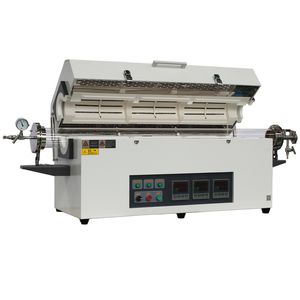
(PLC accuracy 1000MM Steel Pipe tube medium frequency Induction Heating Furnace)
REQUEST A QUOTE
RELATED PRODUCTS
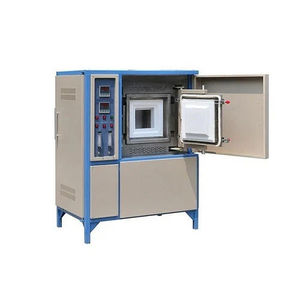
Industrial Wear Resistance Ceramic Pipe High Hardness 99% Alumina Ceramic Tube for Furnace
1500 degree five temperature zone outer atmosphere protection tube furnace large diameter silicon carbide tube furnace
High Temperature Carbon Tube Furnace Customizable Professional Resistance Furnace China Factory Core Components Including Pump
1200C High Temperature Vacuum Tubular Furnace Laboratory Tube Furnace with Vacuum Pump
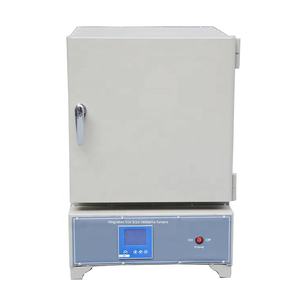
Laboratory 1200c High Vacuum Single Zone Electrolytic Vertical Tube Furnace For Heat Treatment